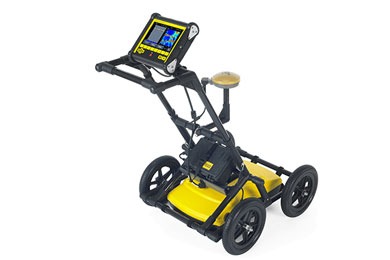
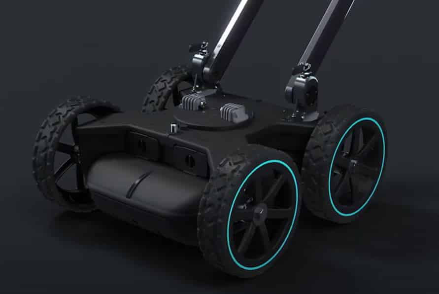
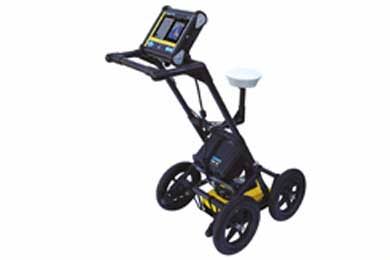
Our Ground Penetrating Radar (GPR) and Concrete Scanning service provides non-invasive, high-resolution subsurface imaging to locate buried utilities, rebar, post-tension cables, and void spaces. By transmitting radar pulses into ground and concrete structures, we map underground environments accurately without ground disturbance or structural damage.
GPR and concrete scanning eliminate risk before core drilling or excavation, delivering accurate subsurface mapping to protect existing utilities and structural integrity.
This advanced geophysical scanning method provides real-time data for construction teams, civil engineers, and facility managers, ensuring safe site operations and eliminating costly utility strikes.
Our specialized GPR systems scan through concrete slabs, asphalt, and soil to identify both metallic and non-metallic underground assets, including PVC lines, fiber optics, power cables, and structural rebar.
FREQUENTLY ASKED QUESTIONS
How Does Ground Penetrating Radar (GPR) Work?
GPR sends high-frequency electromagnetic radar pulses into the ground or concrete matrix. As these signals bounce back off buried objects or layer boundaries, our system analyzes the reflections to build a detailed real-time map of subsurface utilities, voids, and structural rebar.
Can GPR Detect Non-Metallic Pipes Such As PVC And Concrete?
Yes, unlike standard electromagnetic cable locators, GPR detects differences in material properties, allowing it to locate non-metallic utilities like PVC water pipes, concrete culverts, clay drains, and fiber optic conduits.
How Deep Can GPR And Concrete Scanning Penetrators Reach?
Depth capability depends on soil or slab composition and antenna frequency. High-frequency concrete scanners inspect up to 500 mm deep into slabs with high resolution, while lower-frequency ground radars penetrate several meters deep into favorable soils.
Why Is Concrete Scanning Necessary Before Core Drilling Or Cutting?
Concrete scanning locates post-tension cables, structural rebar, electrical conduits, and plumbing lines embedded within slabs. Scanning prior to cutting or core drilling prevents worker injury, avoids structural compromise, and eliminates expensive utility repairs.