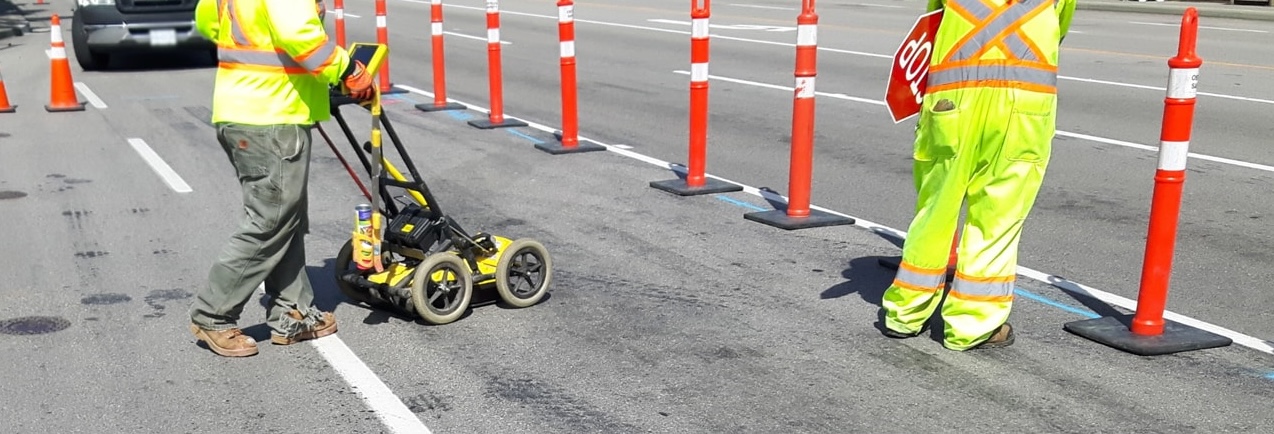
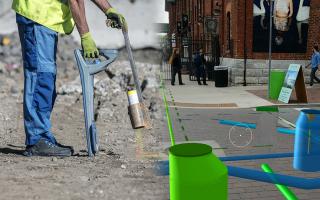
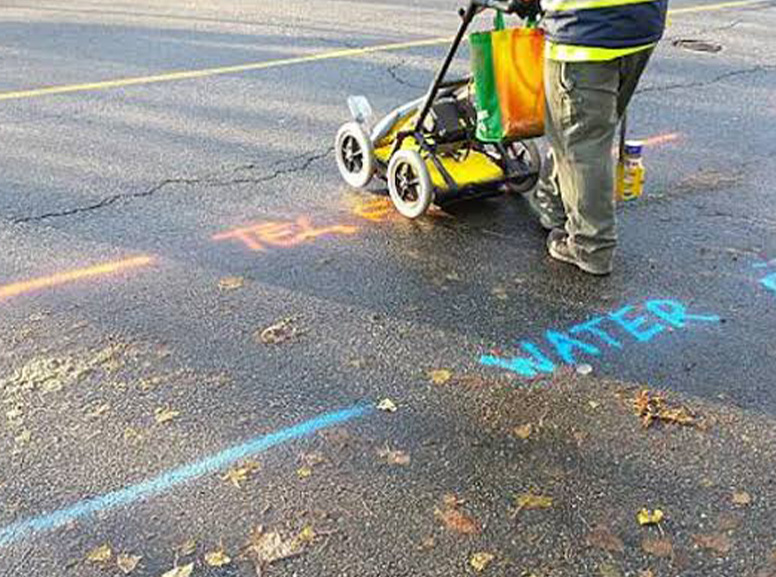
Our Utility Location service delivers accurate, non-destructive mapping of buried infrastructure to prevent utility strikes, project delays, and costly asset damage. Combining Electromagnetic Location (EML), Ground Penetrating Radar (GPR), and high-accuracy GPS logging, we identify and map metallic and non-metallic underground utility networks before site excavation begins.
"Accurate subsurface utility location provides complete ground visibility, protecting field crews, preserving existing networks, and keeping infrastructure projects on schedule.
This proactive mapping process gives civil engineers, site developers, and contractors complete visual clarity of what lies beneath the surface, ensuring safe digging practices and seamless design coordination.
Our certified field technicians systematically sweep project sites to trace, locate, and mark power cables, telecommunication lines, gas mains, water networks, and stormwater pipes.
FREQUENTLY ASKED QUESTIONS
How Does Electromagnetic Utility Location Work?
Our technicians apply a specific frequency signal to metallic pipes or cables using direct connection or induction. An electromagnetic receiver then traces the signal along the ground surface, accurately determining the alignment, path, and depth of the buried utility line.
Can You Locate Both Metallic And Non-Metallic Utilities?
Yes, we combine Electromagnetic Location for conductive metallic pipes and electrical cables with Ground Penetrating Radar (GPR) and traceable sondes to detect non-metallic utilities like PVC water pipes, fiber optics, and concrete conduits.
What Standard Of Utility Mapping Accuracy Do You Provide?
We capture utility data to international Subsurface Utility Engineering (SUE) standards, using high-accuracy RTK GPS equipment to log precise geographic coordinates and depths for seamless integration into your CAD or GIS site plans.
Why Is Professional Utility Location Essential Before Excavation?
Mechanical excavation without prior utility mapping poses severe safety risks, including fatal cable strikes, high-pressure gas ruptures, major commercial power outages, and massive financial liability for damaged public infrastructure.